
Menopause Diet: Foods to Support Hormone Balance Naturally
If you’re going through perimenopause or menopause, you probably don’t need me to tell you how many supplements are now marketed towards women at this stage of life.
And supplements absolutely can have their place.
But before reaching for another product promising to help with hot flushes, mood swings or poor sleep, I want you to ask yourself one question:
Have you really exhausted the food-first approach?
The scale of the supplement market tells its own story. According to Grand View Research, the global menopause dietary supplement market was worth almost $16.8 billion in 2024 and is forecast to exceed $23 billion by 2030.
That is an enormous market.
But if the foundations of your diet are not supporting you, can one supplement really do all the work on its own?
From your mid to late thirties, hormones can start to change as you move through the different stages of perimenopause, menopause and post-menopause.
These hormonal changes, particularly reducing levels of oestrogen and progesterone, can cause significant distress for some women, while others may pass through this stage with relatively little discomfort.
Common symptoms can include hot flushes, night sweats, sleep problems, mood swings, weight gain, lower libido and vaginal dryness.
What you eat is only one part of the menopause picture, but it is an important one.
And I believe starting with food gives you a much stronger foundation before you begin looking for another supplement to solve the problem.
Prefer to watch? In this video, I explain why I encourage women to take a food-first approach to menopause and the foods I prioritise for hormone balance.
Start With the Food-First Foundations
Before we look at specific foods that can help support hormone balance, it is worth looking at the foundations of your diet.
Are you doing everything you can to reduce your intake of ultra-processed foods?
Are you eating enough protein, healthy fats and complex carbohydrates?
Are you combining your foods in a way that supports more stable blood sugar levels?
Are you drinking enough water?
And are you eating enough fibre?
These basic areas matter because they support so many processes throughout the body.
For example, fluctuating blood sugar can have a knock-on effect on energy, mood and cravings. Protein and healthy fats can help meals feel more satisfying, while fibre supports the gut microbiome and healthy elimination.
If ultra-processed foods have gradually crept into your diet, start by looking at where they appear most often. I’ve written more about the latest evidence on ultra-processed foods and their impact on health.
Protein is another important foundation, and I’ve explained more about how much protein you may need.
Healthy fats matter too. They support many functions throughout the body, including hormone health, and you can read more about why healthy fats are important.
Hydration is another area that is easily overlooked. Water should always be the foundation rather than relying on flavoured drinks containing sweeteners and other additives. I’ve written separately about choosing everyday drinks wisely.
Once those foundations are in place, there are three particular areas I like women to focus on during menopause.
Phytoestrogen Foods for Menopause

The word “phyto” means plant, so in very simple terms, phytoestrogens are plant-based compounds that have an oestrogenic effect.
They have been found to mimic oestrogen because they can bind to oestrogen receptors in the body and exert a gentle oestrogenic effect.
You can think of hormones working a little like a lock and key. A phytoestrogen can fit into an oestrogen receptor and produce a mild oestrogen-like effect.
This is very different from the way some endocrine-disrupting chemicals may mimic or interfere with oestrogen, which I have explored separately.
There is no single phytoestrogen food that I believe everyone must eat, and there is no one-size-fits-all quantity.
We are all unique, with different inherited traits, lifestyles, health histories and individual needs.
My advice is to rotate these foods and aim to include at least two different types every day where possible.
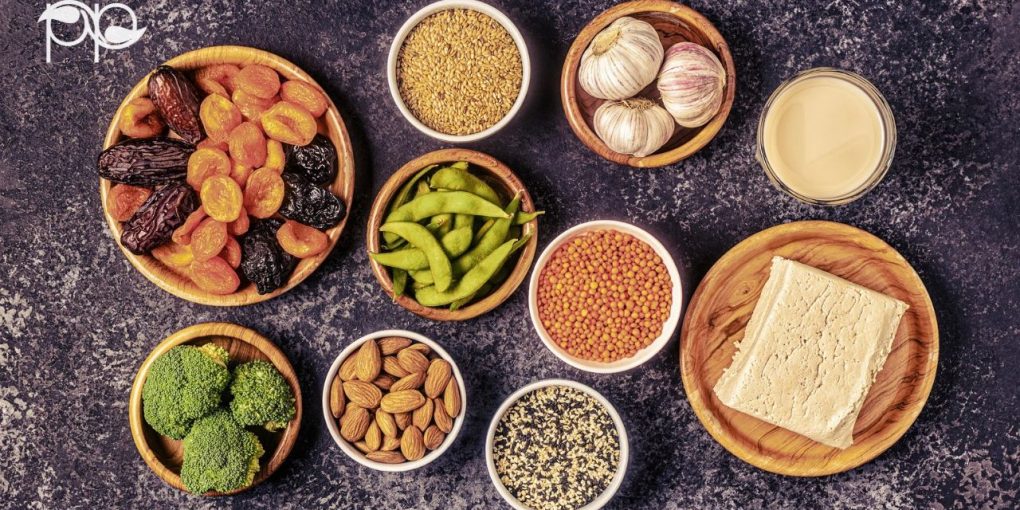
Fermented soya
Soya is one of the best-known phytoestrogen foods and is naturally rich in compounds called isoflavones.
I prefer fermented forms of soya such as:
- tempeh
- miso
- natto
These are closer to the traditional ways soya has been eaten in parts of the Far East.
The fermentation process reduces levels of phytic acid and oxalic acid, which can interfere with the absorption of minerals including calcium, magnesium, iron and zinc.
These minerals become particularly important as women move through menopause and think more seriously about areas such as bone health.
Other phytoestrogen-rich foods
There are plenty of alternatives if soya is not a regular part of your diet.
Useful foods include:
- flaxseeds
- celery
- sesame seeds
- sunflower seeds
- chickpeas
- lentils
- peas
I love hummus because it gives you a double win. It contains chickpeas and sesame seeds.
Add some celery for dipping and you have three phytoestrogen-containing foods in one simple snack or side dish.
Why I prefer milled flaxseeds
Flaxseeds, also known as linseeds, are another food I regularly recommend.
I prefer them milled or ground rather than whole.
Whole flaxseeds are tiny and may pass through the digestive system without being fully broken down. They can still provide fibre, but milling them makes it easier for the digestive system to access the valuable nutrients inside.
Once opened, keep milled flaxseeds sealed and refrigerated to help protect their natural fats.
Cruciferous Vegetables and Oestrogen Metabolism

The next food group I want you to think about is cruciferous vegetables.
These vegetables contain a natural plant compound called indole-3-carbinol, often shortened to I3C.
I3C is converted in the stomach into a compound called DIM, or diindolylmethane.
Putting the complicated names aside, what matters is that these compounds are involved in supporting healthy oestrogen metabolism.
Many people do not realise that once oestrogen has been used by the body, it has to be processed through the liver and safely eliminated.
There are different forms of metabolised oestrogen, and the compounds found in cruciferous vegetables can help support the body’s normal processing of these hormones.
This is why I encourage women not just to think about producing or replacing oestrogen, but also about how effectively the body processes and eliminates hormones once they have been used.
Cruciferous vegetables include:
- broccoli
- Brussels sprouts
- cabbage
- cauliflower
- rocket
- bok choy or pak choi
- collard greens
- watercress
- kale
- horseradish
Ask yourself how regularly these foods appear in your diet.
Are you eating them every day?
Could you include more than one type across your meals?
The aim is not to suddenly eat huge quantities of one vegetable. As always, variety is important.
Support Your Gut Microbiome During Menopause

Fibre and Healthy Elimination
Alongside supporting your gut microbiome, we also need to think about fibre.
Most people do not eat enough.
Fibre is important for healthy bowel movements, elimination and feeding beneficial gut bacteria.
And it is not simply about eating bran or brown bread.
Different foods provide different types of fibre, including soluble and insoluble fibre.
Vegetables are a wonderful place to start.
I encourage women to aim much higher than simply “five a day” and to think about how they can increase the variety of vegetables, salads and lower-sugar fruits they eat.
Berries are particularly useful, along with smaller apples and pears.
Pulses, nuts and seeds are also valuable sources and have the added advantage that several of them are already on our phytoestrogen list.
If you would like to understand the difference between the two main types of fibre, I’ve explained more about soluble and insoluble fibre for gut health.
The important point is to think about fibre as something you are including throughout the day rather than something you occasionally add because you think your digestion needs help.
Food First Does Not Mean Food Only
I want to be clear about something.
Taking a food-first approach does not mean that supplements never have a place.
They can be extremely useful when they are chosen for the right reason and for the right person.
But supplements should not distract us from the foundations.
If your diet is predominantly ultra-processed, your meals are lacking protein and healthy fats, your blood sugar is constantly fluctuating, you are dehydrated and your fibre intake is very low, adding one menopause supplement on top is unlikely to address everything that is going on.
This is why I always take a holistic and naturopathic approach with my clients.
We look at the individual.
We look at food quality, gut health, liver support, blood sugar, hydration, sleep, stress and lifestyle.
And then, where appropriate, we can consider whether additional nutritional support may be helpful.
What Should a Menopause Diet Look Like?
There is no one perfect menopause diet that every woman should follow.
But there are some useful principles:
- make real, minimally processed food the foundation of your diet
- include good-quality protein at meals
- eat healthy fats regularly
- choose complex carbohydrates rather than relying on refined foods
- keep blood sugar as balanced as possible
- prioritise hydration
- eat plenty of fibre-rich vegetables and plant foods
- include phytoestrogen-rich foods regularly
- eat a variety of cruciferous vegetables
- support your gut microbiome with fibre and fermented foods
The important thing is to look at the whole pattern of your diet.
One food will not transform your menopause experience on its own.
It is the combination of these small choices, repeated consistently, that matters.
Final Thought
If you are struggling with menopausal symptoms, it is completely understandable that you may be tempted by the latest product promising to make everything better.
But before automatically reaching for another supplement, take an honest look at your diet.
- Have you really exhausted the food-first approach?
- Could you eat more vegetables?
- More fibre?
- More protein and healthy fats?
- Could you introduce phytoestrogen-rich foods more regularly?
- Could you support your gut microbiome more effectively?
- And could you start reducing the ultra-processed foods that may have gradually become part of everyday life?
You do not need to change everything at once. Start with one or two areas that feel manageable and build from there.
If you are finding menopause difficult and would like help understanding how your diet, digestion and wider lifestyle may be influencing your symptoms, you are very welcome to book a free 20-minute discovery session with me.
We can talk through what is going on and whether personalised nutritional and naturopathic support may be right for you.
Caroline x

FAQs
What foods are best to eat during menopause?
A menopause-supportive diet should focus on real, minimally processed foods with plenty of vegetables, protein, healthy fats, fibre and complex carbohydrates. Caroline also encourages women to regularly include phytoestrogen-rich foods, cruciferous vegetables and foods that support the gut microbiome.
What are phytoestrogens?
Phytoestrogens are naturally occurring plant compounds that can bind to oestrogen receptors and exert a mild oestrogen-like effect in the body.
Which foods contain phytoestrogens?
Foods containing phytoestrogens include fermented soya foods such as tempeh, miso and natto, along with flaxseeds, sesame seeds, sunflower seeds, chickpeas, lentils, peas and celery.
Are cruciferous vegetables good during menopause?
Cruciferous vegetables contain plant compounds involved in oestrogen metabolism. Examples include broccoli, cauliflower, Brussels sprouts, cabbage, kale, rocket, watercress and bok choy.
Why is gut health important during menopause?
The gut microbiome plays a role in oestrogen metabolism and the elimination of used hormones. Supporting microbial diversity, eating sufficient fibre and maintaining healthy bowel movements are therefore important parts of Caroline’s food-first approach.
Should I take menopause supplements or focus on food first?
Supplements can have a useful role, but Caroline recommends first looking at the foundations of your diet, including protein, healthy fats, fibre, hydration, blood sugar balance and your intake of real versus ultra-processed foods. Supplements are best considered as part of a wider, personalised approach rather than as a replacement for good nutrition.

Join my free Health Lifestyle & Nutrition Facebook Group. A wonderful group where you can get help, advice, support and tips to help make the right lifestyle and nutrition choices for you.
Follow me on Social Media for the latest in Natural Health…
Facebook https://www.facebook.com/peytonprinciples
Instagram https://www.instagram.com/peytonprincipleshealth/
Twitter https://twitter.com/carolinepy
LinkedIn https://www.linkedin.com/company/peyton-principles-natural-health/